blog-thumb
  • Post:Admin
  • 2025-09-27 20:19:36
  • Read 289
  • 289
  • 265

English: The Indispensable Language of Global Communication

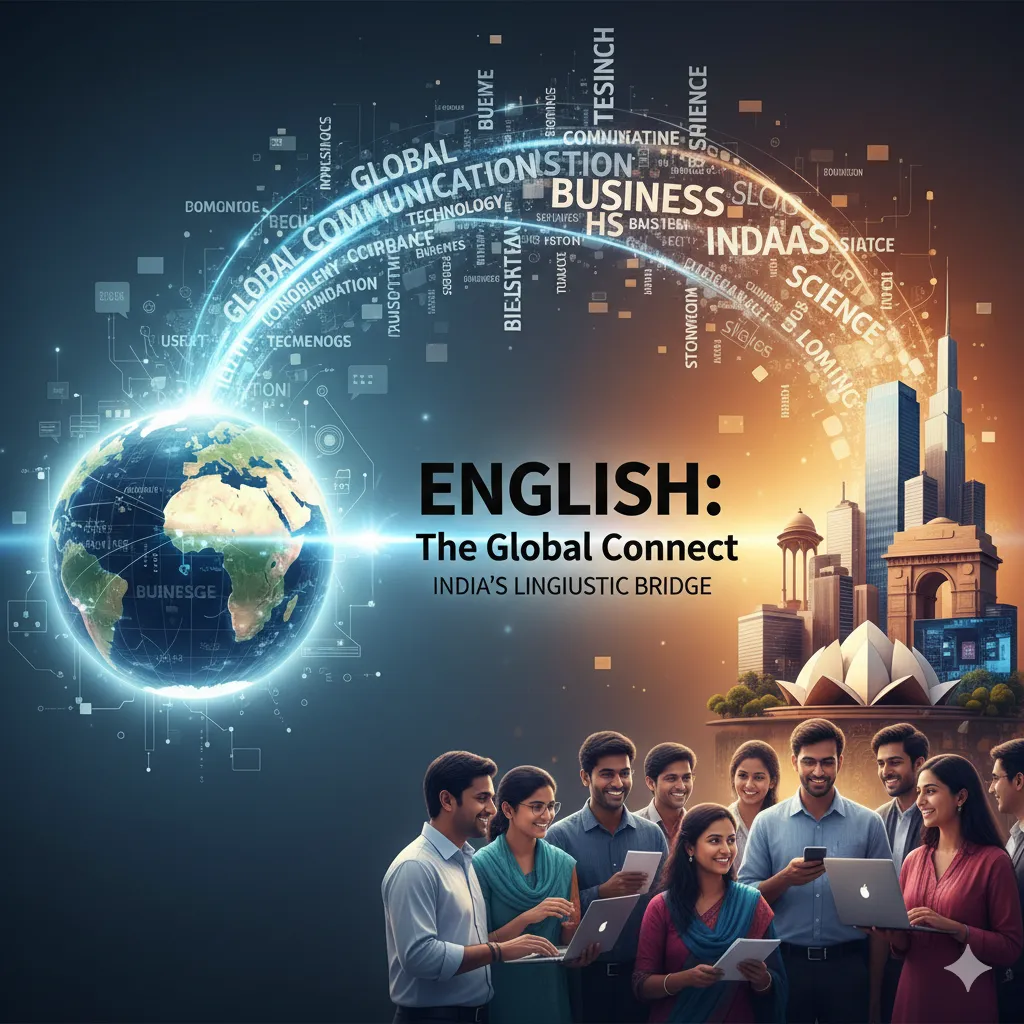
​In our increasingly interconnected world, effective communication across borders is more vital than ever. While countless languages grace our planet, one consistently rises to the forefront as the de facto medium for international exchange: English. From business boardrooms to scientific conferences, and from diplomatic negotiations to popular culture, English plays an indispensable role in facilitating global understanding. But why has this particular language achieved such prominence? And how has a nation like India, so rich in its own linguistic heritage, come to boast one of the largest English-speaking populations outside the Western world?

  • : The Rise of a Lingua France..Why English Dominates
    ​The necessity of English for world communication stems from a confluence of historical, economic, and cultural factors:

  • ​Historical Legacy: The British Empire, at its zenith, spanned vast territories across the globe. As a result, English was established as the administrative, educational, and commercial language in numerous colonies. Even after independence, many of these nations retained English due to its utility and the absence of a universally accepted indigenous alternative.

  • ​Economic Powerhouse: The rise of the United States as a global economic and technological superpower in the 20th century further cemented English's status. American innovation, Hollywood cinema, and popular music spread across the world, carrying the language with them. Today, a significant portion of international business, finance, and trade is conducted in English.

  • ​Science and Technology.: English is the dominant language of scientific research, technological development, and academic publishing. Breakthroughs in medicine, engineering, and IT are often reported and disseminated in English, making proficiency essential for anyone looking to contribute to or stay abreast of global advancements.

  • ​Internet and Digital Media: The internet, largely developed in English-speaking countries, continues to have English as its foundational language. Most websites, programming languages, and social media platforms are either primarily in English or offer English as a primary option, making it crucial for digital literacy and participation in the global online community.

  • ​Soft Power and Culture: English has become the language of global popular culture. From blockbuster movies and chart-topping music to international sports and tourism, English acts as a common denominator, allowing diverse audiences to connect and share experiences.

  • In essence, English serves as a neutral ground, a bridge that allows people from different linguistic backgrounds to communicate effectively without one group having a significant inherent advantage over another's native tongue.

  • (​India's Unique Relationship with English)

  • ​India's journey to becoming the second-largest English-speaking nation (in terms of total speakers) is a fascinating case study rooted in its colonial past and subsequent strategic choices.

  • ​Colonial Legacy: During British rule, English was introduced as the language of administration, higher education, and law. It became the language of the elite and the medium through which Indians could access Western knowledge and communicate with their colonial rulers.

  • ​Linguistic Diversity: Post-independence, India faced the challenge of its immense linguistic diversity. With over 22 official languages and hundreds of dialects, choosing a single national language proved contentious. English emerged as a pragmatic compromise, serving as an "associate official language" that could bridge communication gaps between different linguistic groups within the country, particularly between the Hindi-speaking north and the non-Hindi-speaking south.

  • ​Gateway to Global Opportunities: Recognizing the global dominance of English, successive Indian governments and the Indian populace embraced it as a vital skill for economic advancement. English proficiency became (and remains) a crucial factor for success in higher education, IT, business process outsourcing (BPO), and a wide array of service industries that cater to international clients.

  • ​Education System: English continues to be a primary medium of instruction in many schools and universities across India, particularly for science, technology, engineering, and medicine (STEM) fields. This widespread use in the education system ensures a continuous supply of English-proficient graduates.

  • ​Information Access: For many Indians, English provides unparalleled access to global information, research, and entertainment, acting as a window to the wider world that complements their rich regional languages.
    ​The combination of these factors has not only entrenched English within India's educational and professional landscape but has also cultivated a massive pool of English speakers who, while often speaking it as a second or third language, are highly proficient and functionally fluent. This makes India a unique and powerful player in the global English-speaking community, underscoring the language's essential role in modern communication.

  • ​In conclusion, English's position as the world's leading lingua franca is a multifaceted phenomenon driven by historical momentum and contemporary utility. For countries like India, embracing English has been a strategic move, allowing its citizens to participate fully in the global economy and intellectual discourse while simultaneously celebrating its own rich linguistic tapestry. As our world becomes ever more interconnected, English will undoubtedly continue to serve as the vital thread that weaves us all together.

Recommended